
Hamid Dirar’s The Amulet is reviewed in The Times Literary Supplement of 18 November 2023 by Robert Irwin, the novelist and scholar of the Arab world.
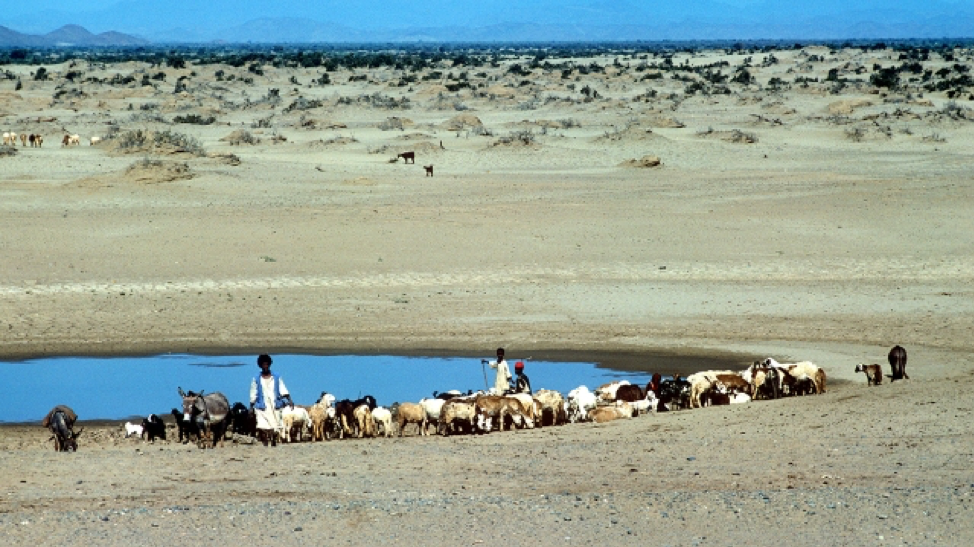
“The book is a mesmerising account of a childhood that was simultaneously paradisal and hellish,” writes Irwin. “Young Hamid was a barefoot nomad of the forests who rarely rode on camels or horses. He hunted on foot. He collected grasses and roots for meals. He learnt how to make waterwheels. He shepherded sheep and goats. In The Amulet, Irwin writes, Hamid Dirar chronicles his passage from his early life to ”the determined and learned adult who writes so compellingly about what it was like to be a wild boy.”
“The popular and unproblematic image of nomads.” he continues, ”is of tribes, such as those of the Arabs, Berbers or Mongols, who are united by blood and who either invade settled pastoral territory or follow a regular seasonal transhumant migration.” The Sudan of Hamid Dirar’s childhood, he explains, is more complicated: “Hamid’s background includes ‘ancestral strands from the Mahas people of Nubia, from the Jaaliyin of Shendi, and from the Shukriya of the Butana – and, by nurture, from the Hadendowa branch of the Beja people of Eastern Sudan’. ” In this milieu, writes Irwin, “it took a complex kind of human algebra based on knowledge of tribal ancestry, intermarriage, adoption and achievement to determine an individual’s status.
The review invokes Hamid Dirar’s account of nights in the nomadic encampments of his childhood. It was “a time when the old world was most present, when a group of youths might gather by the light of a wood fire and watch a religious elder reading the ground for signs of the unknown. Beyond them womenfolk would be watching, bare-breasted in the Hadendowa manner.” Hamid’s youth may have been paradisal in some respects, Irwin concludes, but it was a cruel paradise: “He does not spare the reader dispassionate accounts of circumcisions with stone knives, fights to the death, attacks by crocodiles and a wide range of strange and unpleasant diseases.”
 cityofwords.net