
By John Ryle
Hamid Dirar, Sudanese microbiologist, born 1940 in Wadi el Khireissab, Sudan, died 23 April 2023 in Khartoum.
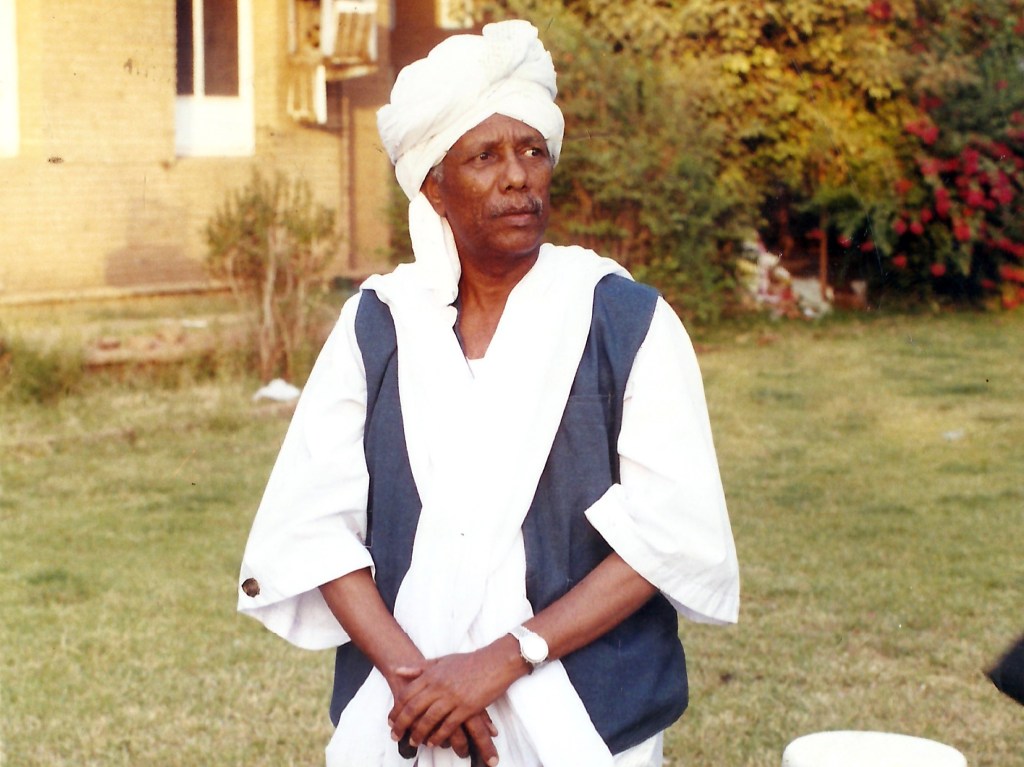
Hamid Dirar was the most celebrated Sudanese scientist of his generation, a gifted writer who illuminated the lives of ordinary Sudanese – and his own remarkable upbringing – with profound knowledge, shrewd judgment and a lively wit. He died in April, after a long illness, at his home in Bahri – Khartoum North – just days after the current war in Sudan began.
A microbiologist who had a distinguished career as a teacher and researcher in universities in the United States and Northern Ireland, as well as in his native Sudan, Hamid Dirar’s early life was as a barefoot camel nomad, son of a feki – a wandering religious teacher – in the remote grasslands and riverain forests near the Ethiopian border. His magnum opus, The Indigenous Fermented Foods of the Sudan (1993), is a book that combines explanations of the complex biochemistry of fermentation with an extensive hands-on understanding of indigenous food preparation and preservation across Sudan.
Based on many years of field research, and dedicated to the rural women of Africa, the book details the variations of fermentation and sun-drying used to preserve foodstuffs including sorghum, millet, dates, honey, milk, fish, meat, wild plants, caterpillars, locusts, fish, frogs and cow urine. It shows how these techniques had enabled generations to survive in a land visited by drought and famine. The book has been hailed by the Sudanese political analyst Magdi el Gizouli as “probably the most important book about Sudan ever written”.
The Amulet, published in 2022, is Hamid Dirar’s memoir of his upbringing in the Sudan-Ethiopia borderlands. The book has gained accolades from writers such as Abdulrazak Gurnah and Nuruddin Farah, who called it “a memoir of rare beauty”.
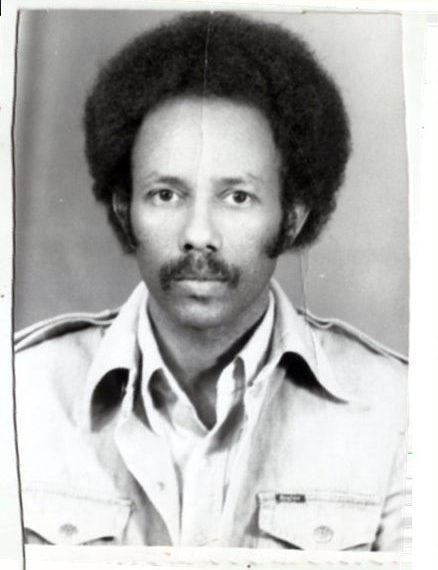
“It was my early existence as a nomad, harsh and sweet by turns, that made me what I am,” we are told in the author’s preface to The Amulet. ”Under my lab overalls, my early life in nomad encampments is inscribed on every part of my body: a dog’s bite; a scar left by the slash of a cutlass; and scores of cuts and burns intended to cure the illnesses of childhood”.
The world he was born into, Hamid Dirar writes, was far from centres of government, and had its own sources of authority. “It was a world lit by fire, where the old ways endured. We kept time by the seasons and by the rising and setting of the sun. A person was either young or old; years hardly mattered. Distances were measured in man-days, donkey-days, and – the longest – camel-days. Events in the wider world were recorded in the names of years: Sannat-Sitta, Year Six, the famine year of 1889. Or the year I was born, 1940, Sanat el Ganabil, the Year of Bombs.”
The final chapter of The Amulet describes an experience of state violence that is a grim precursor of present-day events in Sudan. Hamid Dirar’s student days in Khartoum coincided with the first of the military takeovers that have become a recurrent feature of Sudanese politics: the assumption of power by General Ibrahim Abboud. In 1964, following a student demonstration, covered in blood after a narrow escape from death, the author reflects on his experience:
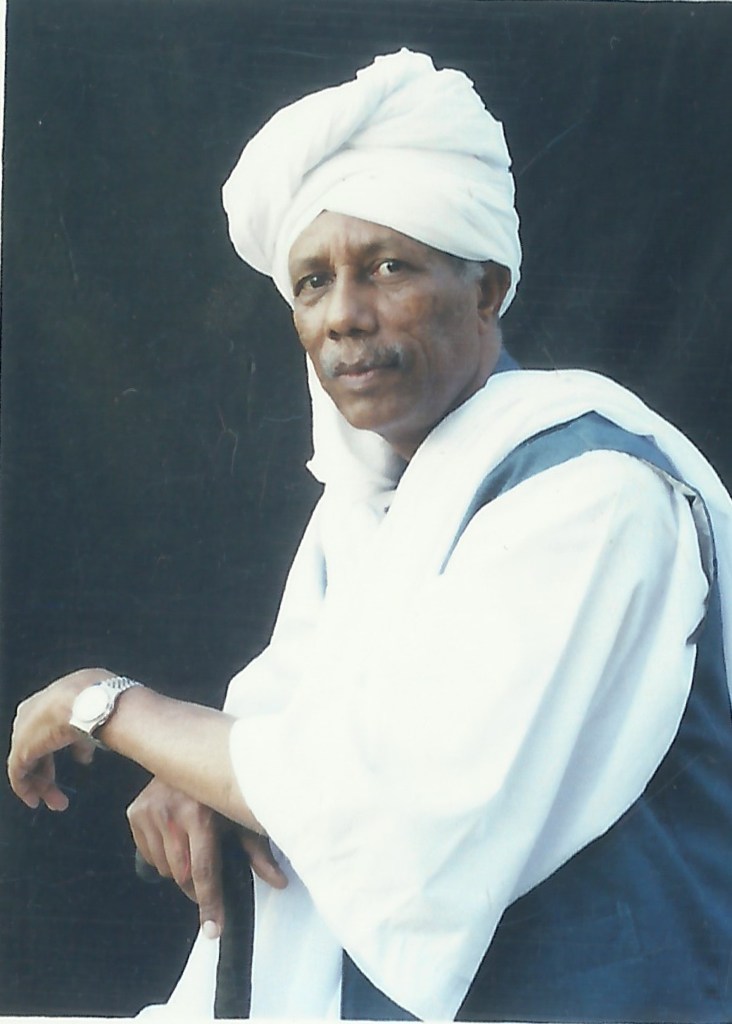
“Back home in Shehateib the death of a single man by the sword was an event that might be discussed for a lifetime. His killer would be known. There, death always had a reason. But here, for the first time in my life, I saw men dying en masse, defenceless, for no reason at all. I had my first taste of what the military mentality, armed with a wealth of weapons, is capable of when it decides to bare its teeth. My limbs were stained with the blood of those I would never know.”
He continues: “The people of Sudan, I had learned from my study of the past – and from my knowledge of my own family history – had been subject to generations of violence, both from within and from without. Turks and Europeans introduced the weapons that had killed my student colleagues… Now Sudanese soldiers acting at the behest of an unelected leader, who had come to power on the back of a tank, had not hesitated to shoot down their fellow-citizens. It would only be when the men and women of my country were able to choose for themselves who should rule them that we would achieve true independence. Only then would Sudanese really be free.”
Hamid Dirar is survived by his wife Hanadi, daughter Maali, and two sons, Ammar and Ghassan.
Originally written in 2023 and updated 2025
 cityofwords.net