
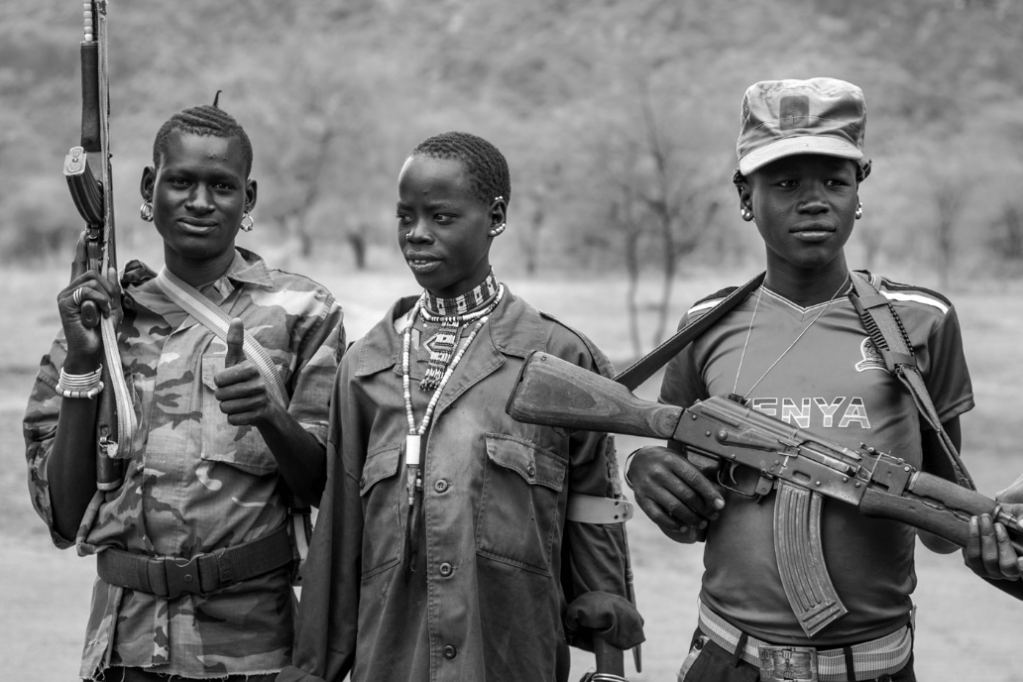
Go to school? Or join a militia?
In a review in Sudan Studies, Joanna Oyediran discusses Liz Hodgkin’s Letters from Isohe — an insightful account, she says, of a ‘heroic effort to keep a secondary school functioning in a country where getting anything done is a headache.’
As a teacher, Joanna Oyediran explains, Hodgkin had privileged access to young people’s thoughts about their society. ‘In their debates, plays, and written work there is a focus on community violence and the authoritarian tendencies of their elders,’ she writes. A student’s diary records such an incident: ‘when people refuse to come to a meeting, the Chief of Isohe sends police to collect people in the village to come for meeting by force.’
Isohe may be physically isolated, but it is vulnerable to broader regional dynamics, such as the impact of the plummeting value of the South Sudan pound and a shutdown in oil production. Hodgkin, the review says, records how school administrators, teachers and students adapted to running a school with barely any resources.
In Isohe, ‘domestic violence, forced marriages and sexual exploitation of female students, are prevalent’. These include the practice of giving girl-children as compensation in legal settlements. ‘Hodgkin does not over-romanticize life in this beautiful village in the mountains’, says Oyediran. Time and again, she returns to the violence. ‘Corporal punishment… fights between students… an incident involving a student and a teacher… fighting between members of different ethnic groups, armed robbery, cattle-raiding and, elsewhere in South Sudan [this is in 2017], a full-blown civil war.’
Isohe and its two schools constitute a place of refuge and hope. When she returns six years later, Liz Hodgkin discovers that the secondary school is three times the size. ‘When civil war came to Equatoria,’ Joanna Oyediran’s review concludes, ‘some young people at least chose education at St Augustine’s over joining the militias.’

