
Edward Lacey
Robert Howes
Raul de Sá Barbosa
João Trevisan
David William Foster
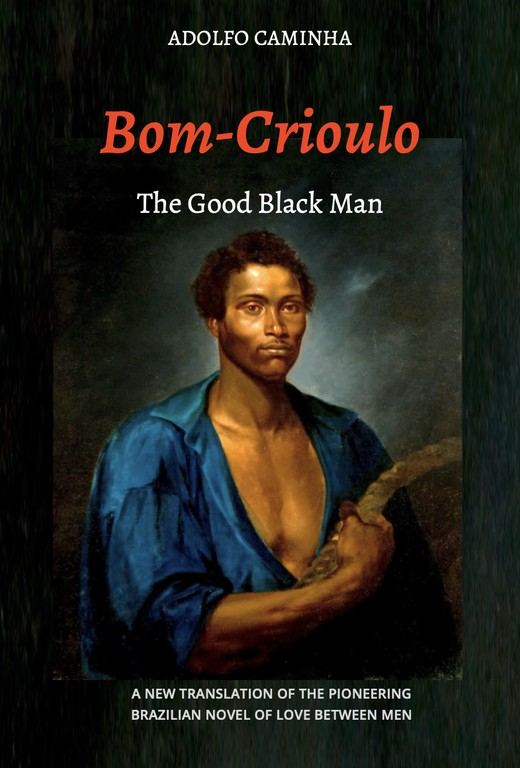
Bom-Crioulo
Adolfo Caminha’s novel Bom-Crioulo: The Good Black Man, first published in Brazil in 1895, is a ground-breaking account of an affair between a cabin-boy and an escaped slave conscripted into the Brazilian navy.
Set in the last decades of the nineteenth century and published a few years after the abolition of slavery in Brazil, it was the first Brazilian novel to deal sympathetically with male homosexuality, and one of the first with a black protagonist.
Bom-Crioulo is a classic of the naturalist movement in South American literature, bringing to life the ruthless discipline on board a naval corvette, the passions of its crew members, and the moral confusion of turn-of-the-century Rio de Janeiro – worlds haunted by the violence of slavery.
In its plain-spoken portrayal of a proscribed sexual relationship – interracial and intergenerational – Bom-Crioulo prefigures later works such as James Baldwin’s Giovanni’s Room and Vladimir Nabokov’s Lolita.
Long out of print in the English-speaking world, Bom-Crioulo appears in a new translation with a critical introduction, glossary and gazetteer.
 Email
Email Instagram
 X
X Facebook
