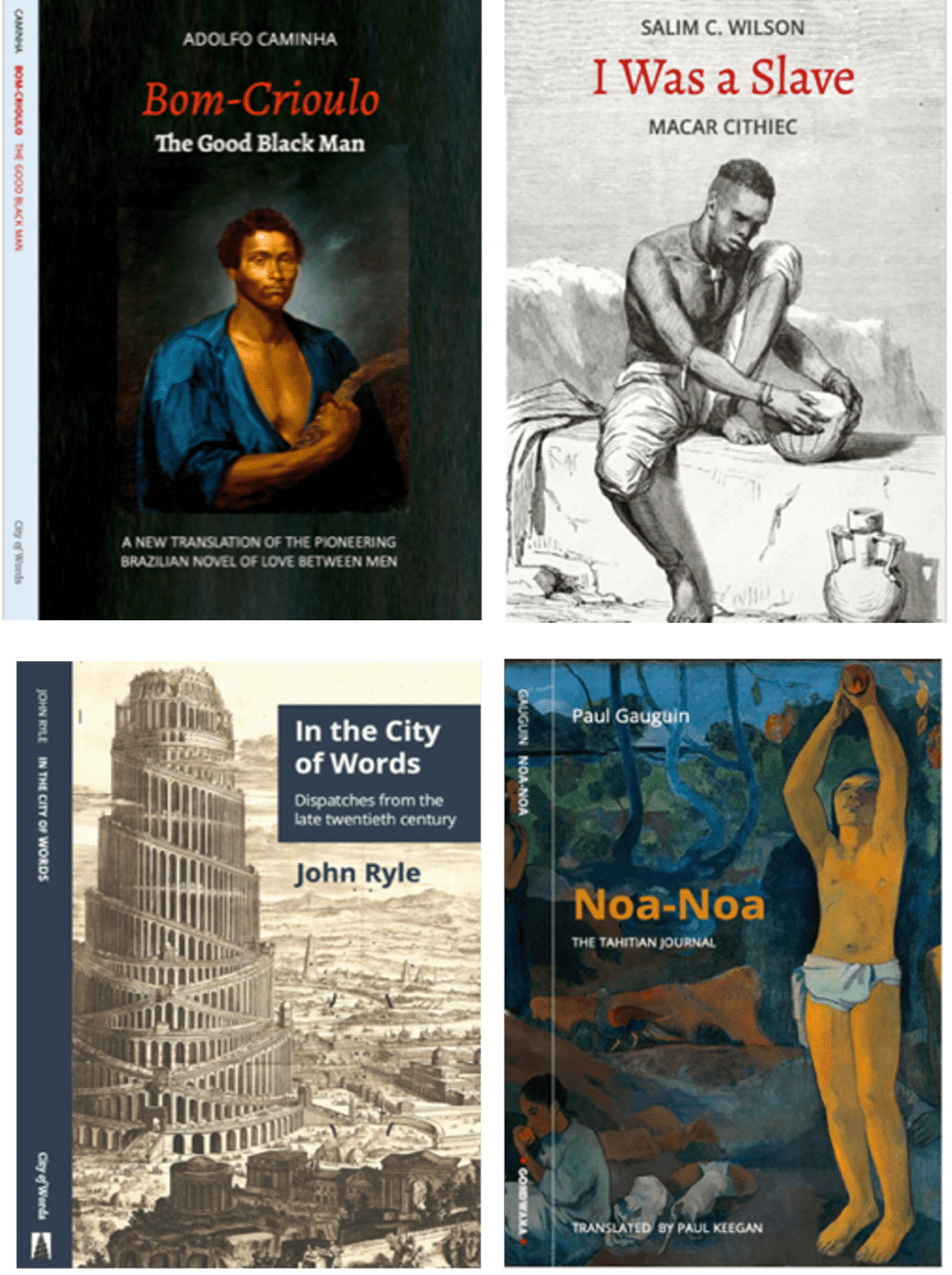
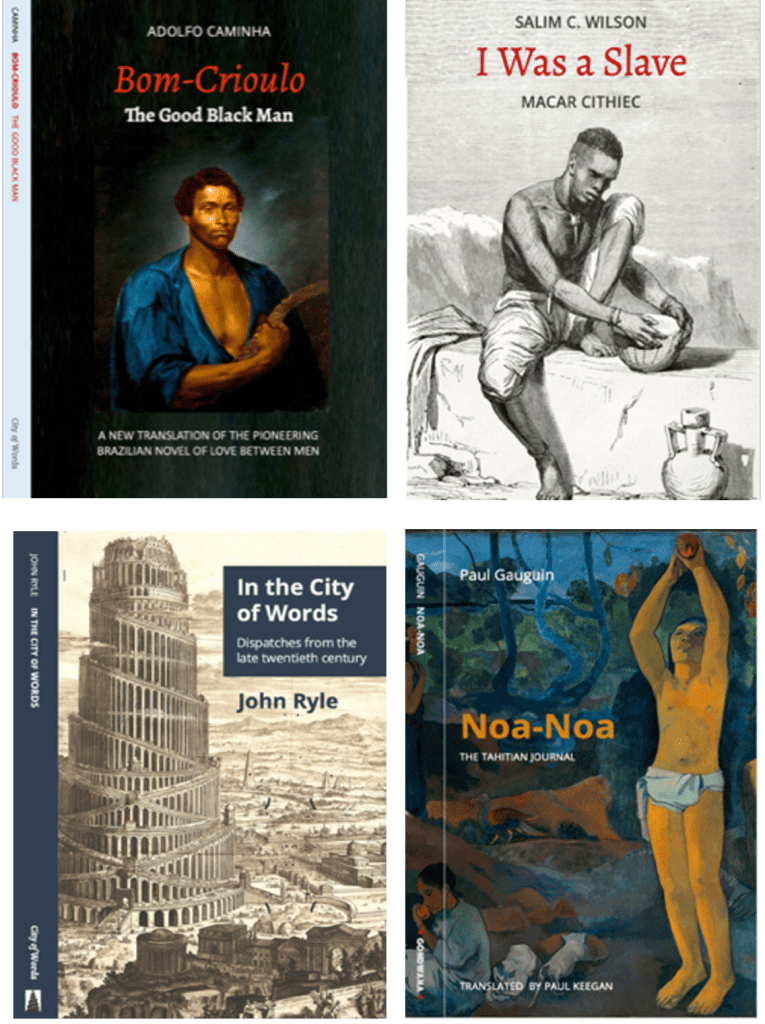
A pioneering nineteenth-century novel from Brazil, and historical memoirs of South Sudan and Tahiti are the lead titles to be published by City of Words in Autumn 2025 and Spring 2026.
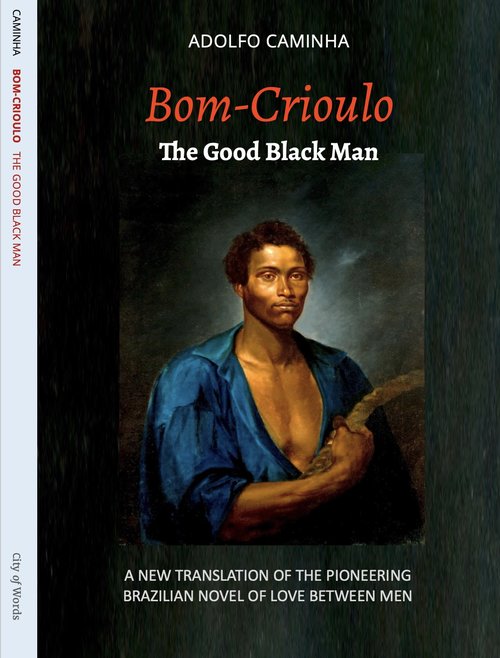
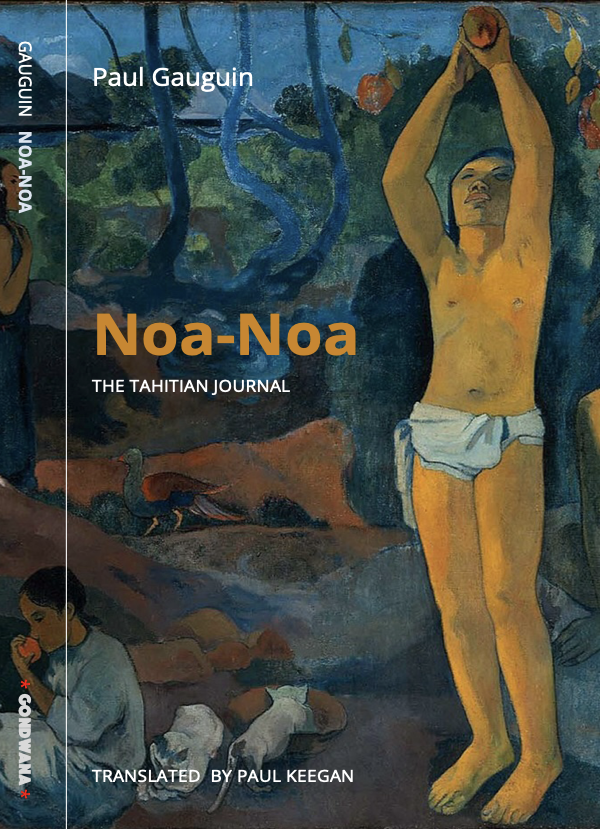
Bom Crioulo: The Good Black Man is a new translation into English of a pioneering novel of love between men set on a Brazilian naval corvette in the late nineteenth century.I Was a Slaveis the autobiography of Macar Cicieth, aka Salim Wilson, the first south Sudanese to travel from Africa to Europe. Paul Keegan’s translation of Noa-Noa– the first parallel-text version of Gauguin’s Tahitian travel memoir – is scheduled for Spring 2026.
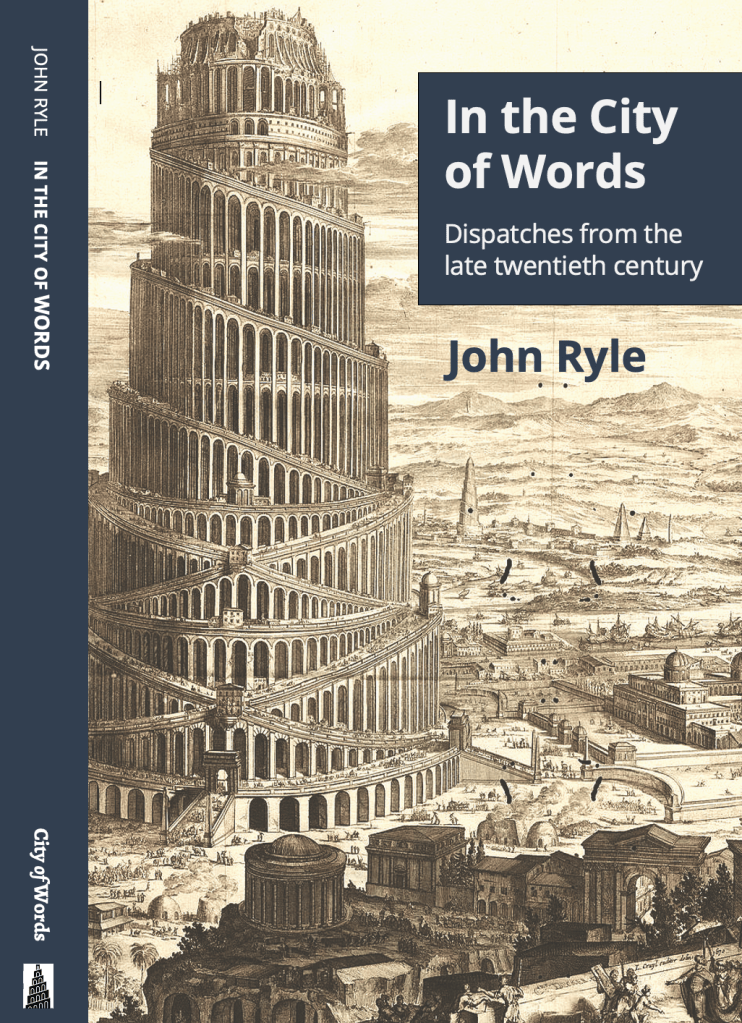
Also in 2026, In the City of Words, a compendium of newspaper columns by John Ryle first published in the Guardian in the 1990s. (For review copies of all titles please contact the Publisher.)
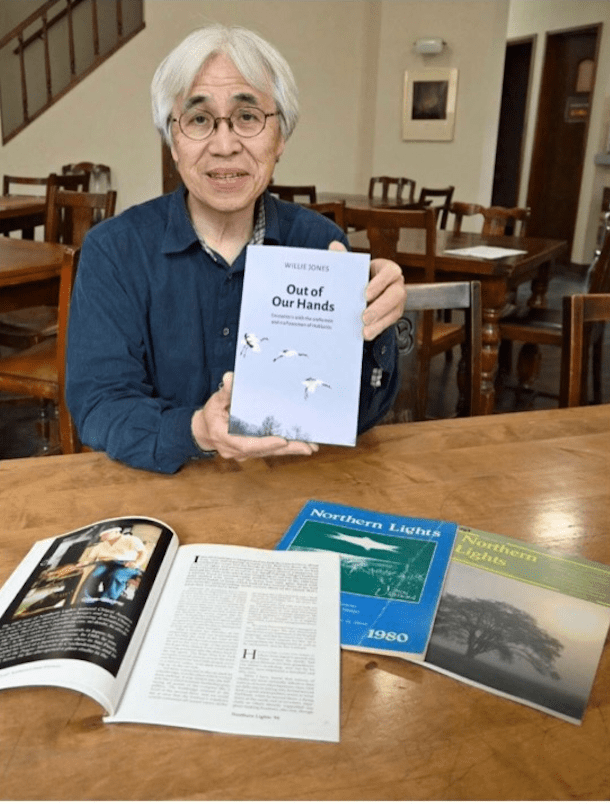
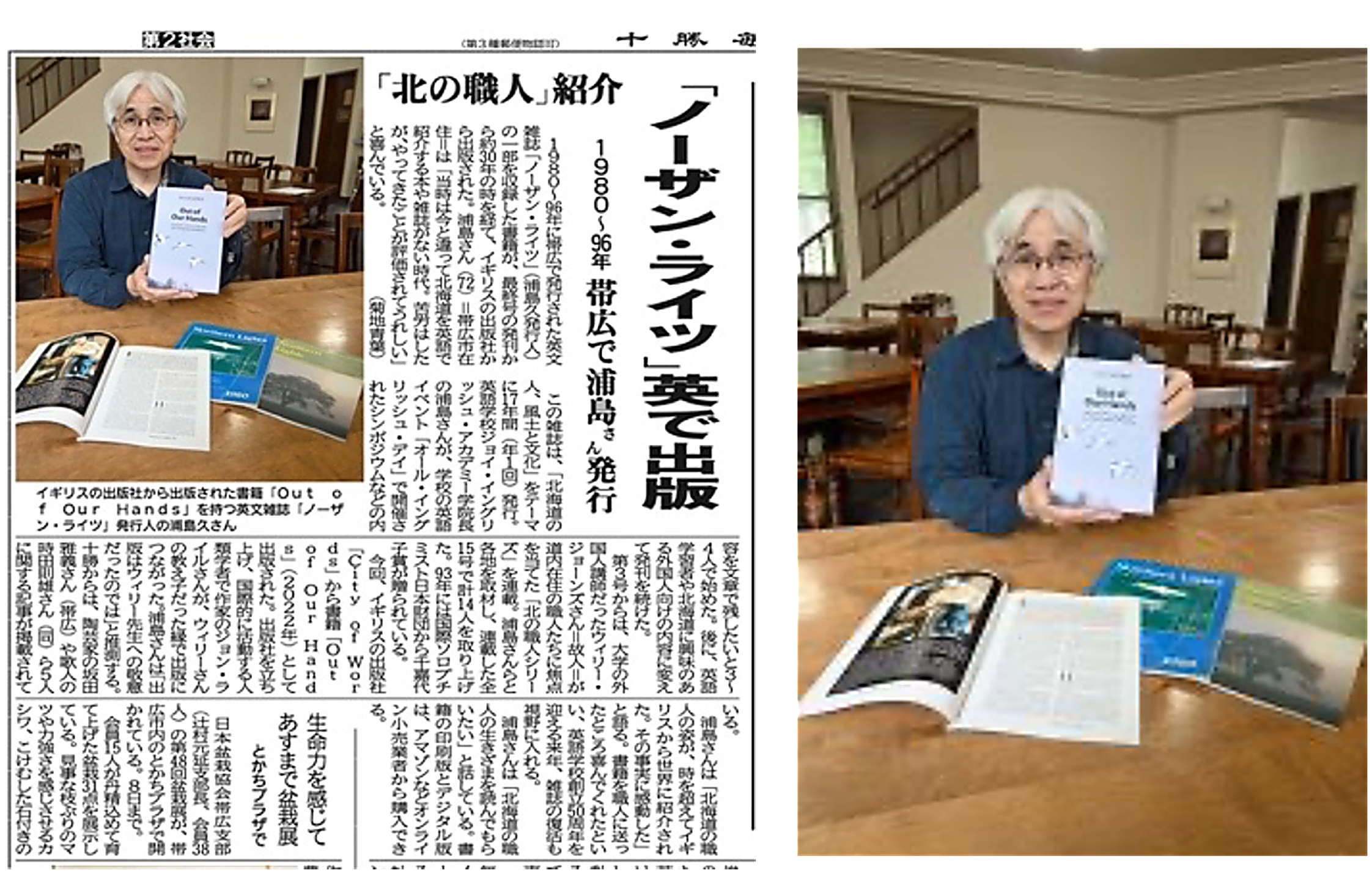
In an interview in the Hokkaido newspaper Kashima, Hisashi Urashima, principal of the Joy English Academy in Obihiro and editor of the magazine Northern Lights, explains how, in the 1980s and 1990s, he commissioned and published the interviews that were collected in Willie Jones’s Out of Our Hands (published by City of Words in 2022). The articles won an award from the Soroptimist Foundation. (See also “Craftsmen of Hokkaido” )
In Out of Our Hands, Willie Jones describes how he met Hisashi Urashima, and the research trips they undertook in rural Hokkaido. Mr Urashima, he says, introduced himself after a talk in Obahiro where Willie mentioned that he had bought, in a Sapporo coffee shop, some pots that had been made by a Mr Sakata, who lived in Obihiro.
This “bright-eyed, boyish founder and principal of a local language school,” Willie wrote, “was also the publisher and editor of Northern Lights, described on the masthead as ‘the land of the pioneers’ (tonden-hei, soldier pioneers sent by the Meiji government to Hokkaido to colonise what was regarded as unclaimed land…).”
“It turned out,” Willie continued, “that Mr Urashima was a friend of Mr Sakata; there and then he gave me a piece of paper and a pencil and asked me to write my impression of Sakata’s work for the next issue of his magazine. For the next dozen years, the magazine published articles about craftsmen and craftswomen living in Hokkaido that Mr Urashima commissioned from me.”
Northern Lights: Masayoshi Sakata, Willie Jones
The article in Kachimai reports that, since the publication of Out of Our Hands, Hisashi Urashima has tracked down the majority of the craftsmen and women featured in the book to give them copies of it. They include the poet Norio Tokita and the ceramicist Masayoshi Sakata, subject of the first profile in Out of Our Hands. “I really want people to read about the lives of Hokkaido’s artisans,” Urashima-san tells the interviewer. And, he says, he is setting about reviving Northern Lights to celebrate the fiftieth anniversary of the English Academy in Obihiro.
Bom Crioulo: The Good Black Man(1895) is a pioneering novel of love between an escaped black slave conscripted into the Brazilian navy and a white cabin-boy. Set in the last decades of the nineteenth century and published seven years after the final abolition of slavery in Brazil. It was the first Brazilian novel to deal sympathetically with homosexuality, and one of the first to have a black protagonist.
The author, Adolfo Caminha, born in 1867, was a former naval officer, forced to resign his commission following a scandalous affair with an army officer’s wife. Bom Crioulo appears in a new translation by John Ryle, with an introduction and glossary
Before City of Words became a publishing house it was a newspaper column, written by John Ryle, published in the Guardian from 1995 to 1999. In the City of Wordscollects a hundred and one of these weekly columns, covering information technology, literature, the arts, anthropology, arms control, sexual politics and natural history, with reporting from South Sudan, Brazil, Bhutan, Cuba, the UK and points south.
Gauguin’s extraordinary Tahitian journal in an immaculate new translation by Paul Keegan
Forthcoming 2026
Noa-Noa is Gauguin’s journal of his sojourn in Tahiti and his marriage to a young Tahitian. Paul Keegan’s new translation, to appear in 2026, is the first parallel text edition of Noa-Noa: it includes the original French alongside the English version, with woodcuts and engravings by Gauguin.
323 pages. Map. Genealogy. Glossary. Gazetteer. ISBN 978-1-9160783-1-4
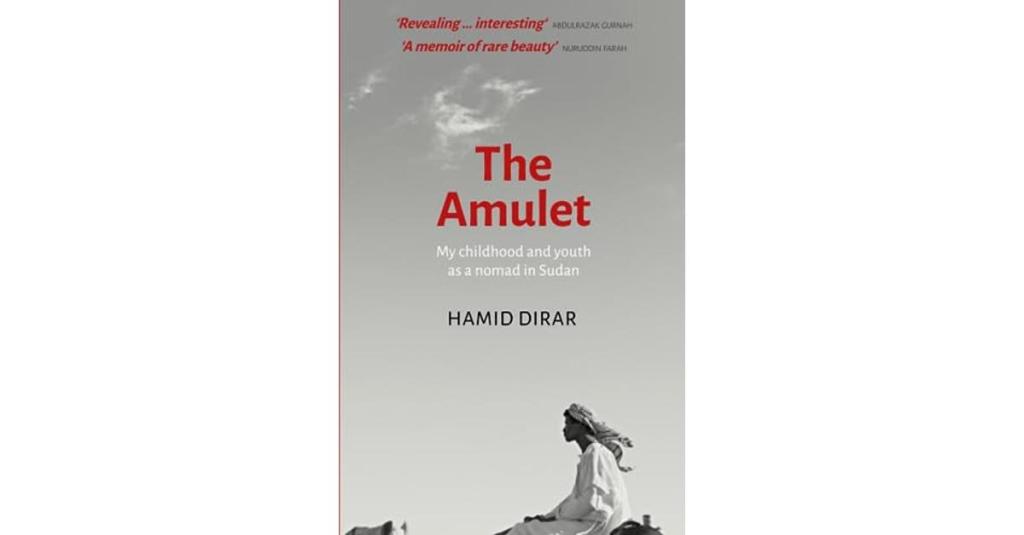
“It was my early existence as a nomad, harsh and sweet by turns, that made me what I am,” writes Hamid Dirar. ”Under my lab overalls, my early life in nomad encampments is inscribed on every part of my body: a dog’s bite; a scar left by the slash of a cutlass; and scores of cuts and burns intended to cure the illnesses of childhood….”
The Amulet is the story of a boy’s pursuit of knowledge in a world of sheikhs and matriarchs, camel-raiders, poets and night-hunters. In Hamid Dirar’s mesmerising account of a pastoralist society in mid-twentieth century Sudan, we are transported to his ancestral homeland in the far north – Nubia, the land of rocks – then south to the seasonal settlements in the Butana, an endless grass plain close by the Ethiopian border. It’s a realm of violence and beauty, famine and plenitude, with its own laws, where the modern world is a distant speck on the horizon – until a military coup in the capital, Khartoum, transforms the author’s life and the political future of Sudan.
Hamid Dirar is the author of the classic The Indigenous Fermented Foods of the Sudan. A world-renowned biochemist, his early life was as a nomadic camel-keeper in Eastern Sudan, near the border with Ethiopia. Hamid Dirar died on 23 April 2023 at his home in Khartoum.
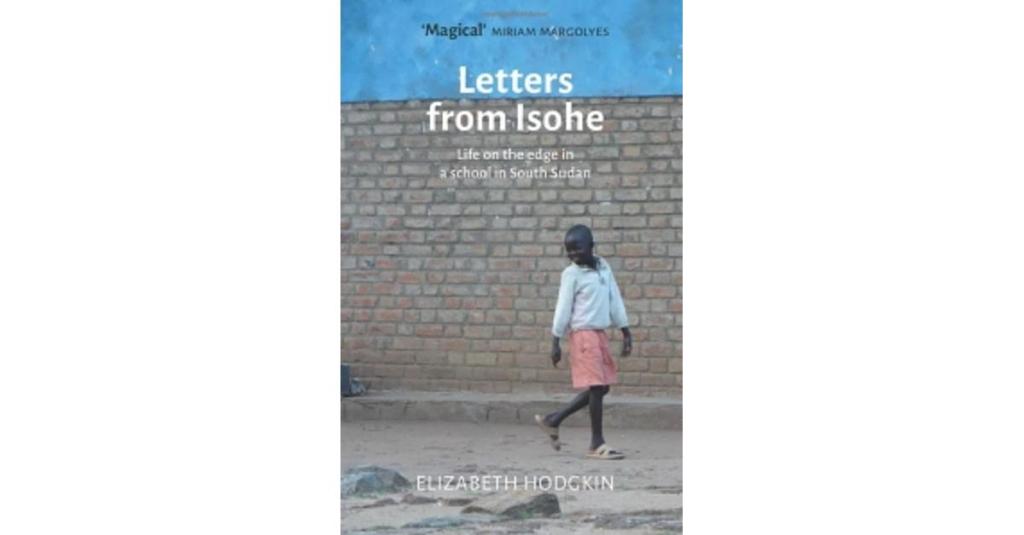
“If you read no other book this year, read this one. Liz Hodgkin goes to one of the riskiest parts of Africa to teach. In her magical letters home, she shows how the world can be made a better place – for all of us.”
MIRIAM MARGOYLES
111 pages. 14 illustrations. Map. ISBN 978-1-9160783-2-1
In 2011, following the independence of South Sudan, Elizabeth Hodgkin – a historian and human rights researcher – taught in a village in the remote Dongotono Mountains, joining South Sudanese colleagues in their struggle to keep the school open as the country pulled back from war. Sometimes there was no food; girl students were pressured into marriage; violent acts were commonplace. Liz Hodgkin’s twelve letters home – joyful, comic and terrifying by turns – are a gripping account of a world where rainmakers, priests and cattle thieves strive to live from day to day, and young people yearn for education and opportunity in a world of danger.
“The rainy season ends as the term ends,” she writes. “Suddenly the grass is dry and scorpions appear in houses. The students set off home, girls with trunks on their heads, boys mostly with backpacks, walking in groups of six or more, for safety. Walking in this season is hard; and the heat dries the mouth up as soon as you drink. Students who are going home to Torit or Juba have to wait for vehicles which may not travel at all.
“But this is Isohe,” she continues, “so we are used to it. A town with no telephone network, with nothing in the market, with roads deep in mud, and a gun crime every fortnight. But with beautiful mountains, a good climate, fertile land, a strong women’s group and the only undamaged church in Equatoria. And our two wondrous, struggling schools.”
Liz Hodgkin worked as a lecturer in the History Department at the University of Khartoum, and as a human rights researcher for Amnesty International, reporting on the Middle East and Africa. From 2012 to 2013 she taught at St Augustine’s School in the village of Isohe, in Eastern Equatoria, South Sudan.
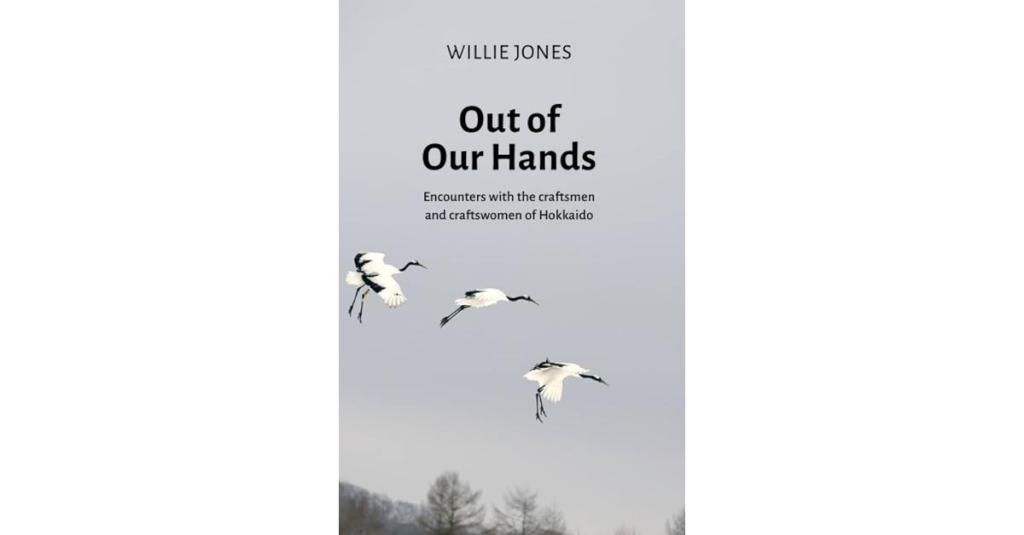
Out of Our Hands is a lyrical account of the craftspeople and makers of Hokkaido, Japan’s wildest island, an intimate portrait of a thriving world of potters, wood-carvers, weavers, dyers, sword-smiths and glass-blowers.
169 pages. 14 illustrations. Map. ISBN 978-1-9160783-3-8
“Hokkaido is an island where earthquakes are regular events,” writes Willie Jones. “Sudden fire is a familiar sight; volcanic eruptions still drive residents from their homes. The work of the potter Masayoshi Sakata reflects this: some of his pots are as black as basalt, some grey as steel; some have thick smears of glaze running down their sides; some look like a house that burned down in the night. Where Sakata lives, the hills are ribbed with snow even in June, and often plumed with smoke. Lava flows from them, as the glazes spill down the sides of one of Sakata’s pots…. Some knowledge is as old as the hills, and it is very likely from the hills that we learned it.”
Out of Our Hands is an intimate account of the craftspeople who live and work in Hokkaido, in the volcanic landscapes of Japan’s wildest island. Drawing on fifteen years of journeys and conversations, Willie Jones brings to life a world of sword-smiths, potters, painters, glass-blowers, weavers, dyers, etchers and wood-carvers, describing with lyrical precision their lifelong dedication to their craft and submission to the materials they work with – to the power of arrested fire and awakened stone.
Willie Jones was born in Hereford, England, in 1931. He taught at St Bees School in Cumbria and Shrewsbury School in Shropshire and has been Lecturer in English at Hokkaido University and Professor of English Rhetoric at Sapporo University. He is the author of essays on language and rhetoric, and memoirs in verse and prose of his childhood in England and later life in Japan. He lives in Sapporo.
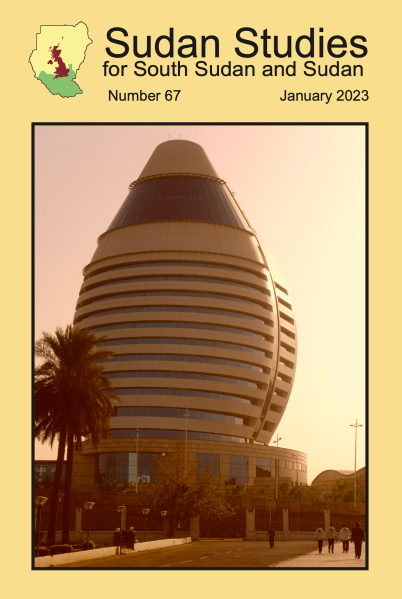
In a review in Sudan Studies, Joanna Oyediran discusses Liz Hodgkin’s “insightful and entertaining”Letters from Isohe – a perspicacious account, she says, of “a heroic effort to keep a secondary school functioning in a country where getting anything done is a headache.”
As a teacher, writes Oyediran, Hodgkin had privileged access to young people’s thoughts about their society,” “In their debates, plays, and written work there is a focus on community violence and the authoritarian tendencies of their elders,” she writes. In his diary, one student records such an incident: “when people refuse to come to a meeting, the Chief of Isohe sends police to collect people in the village to come for meeting by force.”
Isohe may be physically isolated, writes Oyediran, but it is vulnerable to broader regional dynamics, such as the impact of the plummetting value of the South Sudan Pound and a shutdown in oil production. Hodgkin, she says, records how school administrators, teachers and students adapted to running a school with barely any resources.
In Isohe, writes Oyediran,“Domestic violence, forced marriages and sexual exploitation of female students, are prevalent.”. These include the practice of giving girl-children as compensation in legal settlements. Hodgkin, she says, “does not over-romanticize life in this beautiful village in the mountains. Time and again, she returns to the violence. Corporal punishment… fights between students… an incident involving a student and a teacher… fighting between members of different ethnic groups, armed robbery, cattle-raiding…. And elsewhere in South Sudan [this is in 2017], a full-blown civil war.” “Isohe and its two schools constitute a place of refuge and hope,” Oyediran concludes. “When Liz Hodgkin returns six years later she discovers that the secondary school is three times the size. When civil war came to Equatoria, some young people chose education at St. Augustine’s over joining the militias.”
“This was how I came into the world, the son both of a living man, and of a ghost…”. In Hamid Dirar’s recently published memoir, the paradox of parentage takes central stage. Described by the novelist Nuruddin Farah as “a memoir of rare beauty”, by the Sudanese political commentator Magdi el Gizouli as “spellbinding”, and by the scholar Robert Irwin, in the Times Literary Supplement as “mesmerising“, The Amulet is a coming-of-age memoir that delights all those who read it.
Dr Dirar is author of the classic The Indigenous Fermented Foods of the Sudan(1993). He was born a nomadic camel-keeper in Eastern Sudan. The Amulet is an account of his boyhood and youth that transports the reader to his ancestral homeland in Nubia–the land of rocks–and thence to the Butana, the great grass plain along the Ethiopian border where he grew to manhood. He was, he explains, the son of two fathers: his birth father and his birth mother’s deceased husband, a religious teacher with powers that extended beyond the grave. In Hamid Dirar’s youth the modern world remained a distant prospect–until the day his life and the politics of Sudan were transformed by the military coup of 1964.






 cityofwords.net